What is Cpu Clock | Working & Comparison also Covered
Published: 15 Sep 2026
In this article, we will explore what the CPU clock is, how it works, why it is important, and what is meant by clock speed.
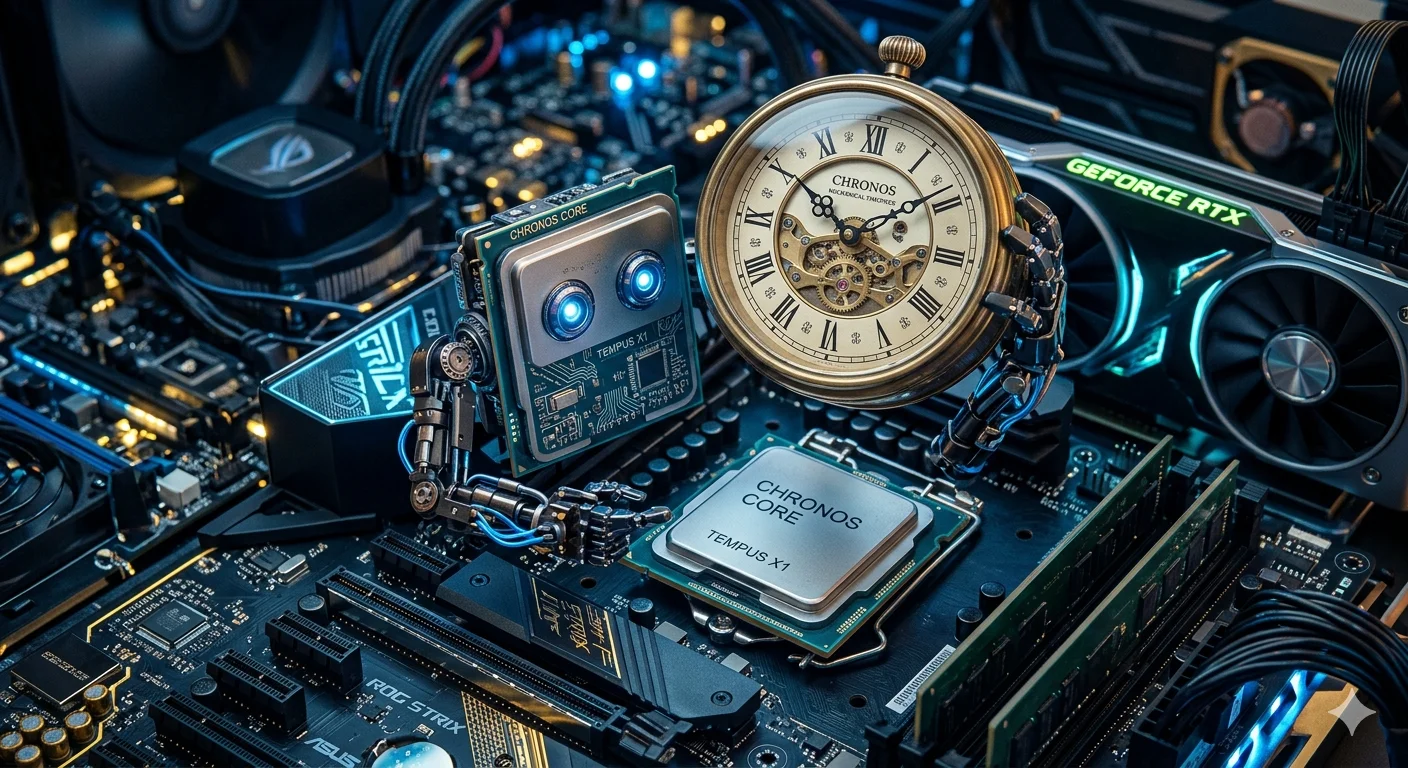
By the end, you will clearly understand how this “invisible timing system” helps your computer run smoothly and efficiently.
Definition
A CPU Clock is an electronic signal inside the processor that controls the timing of all operations. It sends regular electrical pulses that tell the CPU when to start and when to complete each instruction.
CPU Clock Working
The cpu clock works by sending regular electrical pulses called clock signals inside the processor. These pulses act like a tick-tock rhythm that controls every action of the CPU.
Each pulse tells the CPU to perform one small step of an instruction. When one pulse arrives, the CPU starts a task; when the next pulse comes, it moves to the next step. In this way, billions of tiny steps happen every second.
The CPU only performs operations according to the clock signals, keeping all parts perfectly synchronized.
Base Clock vs Boost Clock
Base Clock is the standard speed at which a CPU normally operates under regular conditions, providing stable and energy-efficient performance.
When the system needs extra power for demanding tasks, the processor automatically increases its speed to the Boost Clock, allowing faster processing for activities like gaming or video editing.
Clock Speed vs Performance
Many students think that a higher clock speed always means a faster computer, but this is not completely true.
Clock speed shows how fast a CPU works in one second, but overall performance depends on several factors working together:
- Clock Speed → How quickly instructions are processed
- CPU Cores → How many tasks the CPU can handle at the same time
- Cache Memory → Helps the CPU access data faster
- CPU Architecture → How efficiently the processor is designed
A CPU with higher GHz is usually faster, but a processor with more cores and better design can sometimes perform better even at a lower clock speed.
Real-Life Example
Imagine a school bell that rings at regular intervals to control when students start and stop activities. The CPU clock works in a similar way.
It sends continuous timing signals that tell the processor when to perform each instruction. If the bell rings faster, more activities happen in less time; likewise, a higher CPU clock speed allows the computer to complete more tasks every second.
Misconceptions
- Thinking the CPU clock shows time like a wall clock.
- Believing higher GHz always means the best processor.
- Mixing clock speed with RAM or storage capacity.
- Assuming one clock cycle completes a full program (it only performs a small step).
- Thinking CPU speed depends only on clock speed and nothing else.
Final words
We learned what the CPU clock is, how it works, what clock speed means, and how it affects overall performance. Now you should have a clear idea that a computer’s speed is not just about one factor, but a combination of many things working together.
If you still have any confusion or want to learn more, feel free to ask your questions.


- Be Respectful
- Stay Relevant
- Stay Positive
- True Feedback
- Encourage Discussion
- Avoid Spamming
- No Fake News
- Don't Copy-Paste
- No Personal Attacks
- Be Respectful
- Stay Relevant
- Stay Positive
- True Feedback
- Encourage Discussion
- Avoid Spamming
- No Fake News
- Don't Copy-Paste
- No Personal Attacks
