What is Speaker | Parts – Working | Types & History
Published: 15 Sep 2026
Definition: A speaker is an output device that converts digital audio signals into sound you can hear. It plays music, alerts, voices, and all types of audio from a computer or other devices.
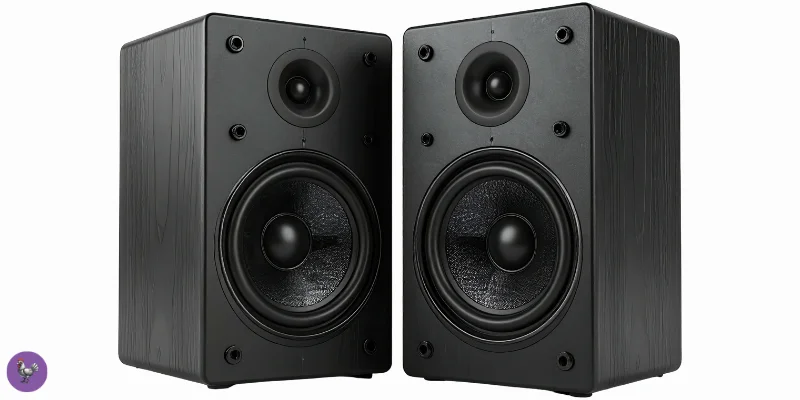
How Speaker Works
A speaker works by turning electrical signals into sound waves that your ears can hear. Inside it, there’s a small but powerful combination of parts: a voice coil, a magnet, and a cone.
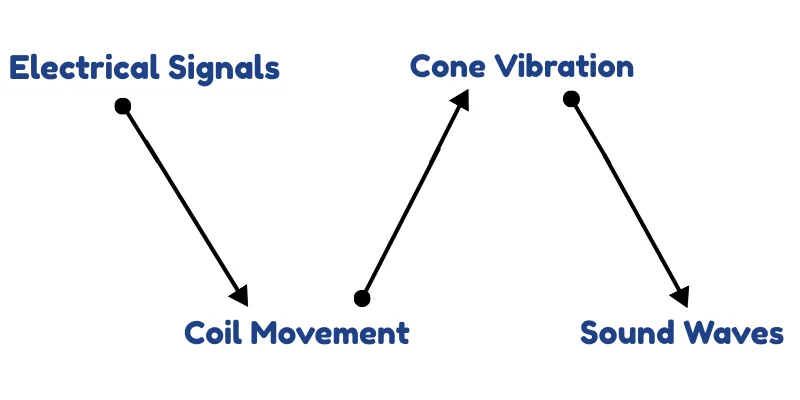
When your device sends an audio signal, the voice coil starts moving back and forth because of the magnetic field. This movement pushes the cone, which then moves the air around it. That moving air becomes the sound you hear – whether it’s music, games, or videos.
So basically, the speaker takes invisible signals and turns them into real, clear sound right in front of you.
Parts of the Speaker
A speaker may look simple from the outside, but inside it’s a smart setup of different parts working together to produce clear and powerful sound.
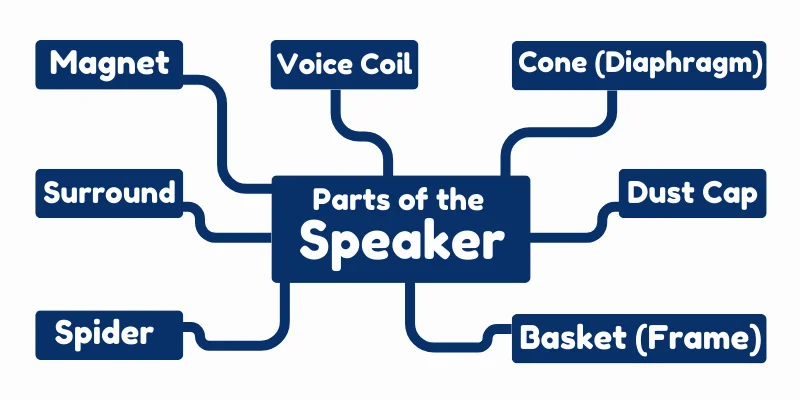
Each component has its own job, and even a tiny change can affect the quality of what you hear. Here are the main parts in easy points:
- Magnet: Creates the magnetic field that helps the voice coil move.
- Voice Coil: Moves back and forth with the audio signal to vibrate the cone.
- Cone (Diaphragm): Pushes air to create sound waves.
- Surround: Holds the cone in place while allowing smooth movement.
- Spider (Suspension): Keeps the voice coil centered and stable.
- Dust Cap: Protects the inner parts from dust and debris.
- Basket (Frame): The main structure that holds all the parts together.
Connection of Speakers
Speakers can connect to a computer or mobile device in different ways. The most common way is through a 3.5mm audio cable, which plugs into the headphone or audio jack of the device.
Some speakers also connect using USB cables, which can provide both power and sound signals.
Modern speakers often use Bluetooth technology, allowing them to connect wirelessly to smartphones, tablets, or laptops. Once connected, the device sends audio signals to the speaker, and the speaker plays the sound for you.
Advantages and Disadvantages of Speaker
In this section we will take a look on some pros and cons of speakers in a simple way.
| Advantages of Speaker |
|---|
|
| Disadvantages of Speaker |
|---|
|
Types of Speakers
Speakers come in many types, and each one is designed for a specific purpose or listening style.
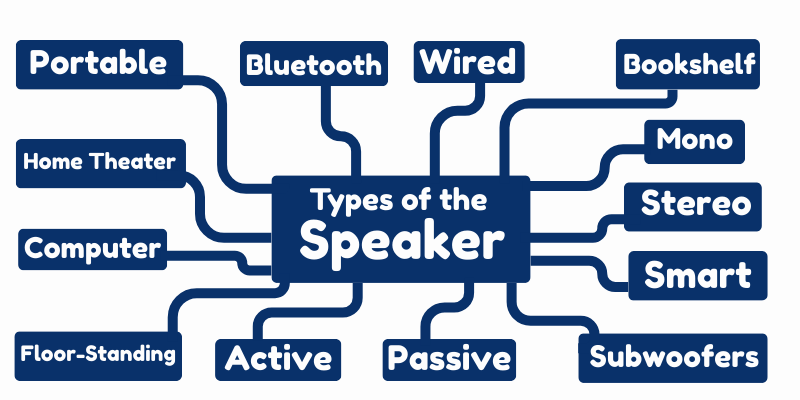
Knowing the main types helps you choose the right one for your setup. Here are the most common ones, explained simply. Take a look:
- Portable Speakers: Small, wireless, and easy to carry anywhere.
- Bluetooth Speakers: Connect without cables and work with almost any device.
- Wired Speakers: Offer stable sound quality through physical connections.
- Home Theater Speakers: Built for surround sound and immersive movie or gaming experiences.
- Smart Speakers: Come with voice assistants and offer hands-free control.
- Computer Speakers: Designed for desktops and laptops with clear near-field audio.
- Bookshelf Speakers: Compact speakers that deliver strong sound for small to medium rooms.
- Floor-Standing Speakers: Tall, powerful units for rich and deep sound.
- Subwoofers: Specialized speakers that produce strong bass frequencies.
- Active Speakers: Have built-in amplifier.
- Passive Speakers: Don’t have Built-in amplifier.
- Mono Speakers: uses only one audio channel.
- Stereo speakers: uses two separate audio channels,
What is Amplifier?
An amplifier is a device that makes audio signals stronger before they reach the speaker. The sound signal coming from a computer, phone, or music player is usually very weak.
The amplifier increases the power of this signal so the speaker can move its parts properly and produce louder and clearer sound. Without an amplifier, the sound from many speakers would be too quiet to hear properly.
Active vs Passive Speakers
Active speakers have a built-in amplifier inside them. This means they can connect directly to a computer, phone, or music player and work without extra equipment.
Passive speakers do not have a built-in amplifier. They need an external amplifier or receiver to power them and send strong audio signals. Because of this, passive speakers are often used in larger sound systems.
Mono vs Stereo Speakers
A mono speaker system uses only one audio channel, meaning all the sound comes from a single source. The same sound is played through one speaker, so the audio does not have much depth or direction.
A stereo speaker system uses two separate audio channels, usually played through two speakers (left and right). This creates a wider and more natural listening experience, where sounds can feel like they are coming from different directions.
What is Speaker Impedance?
Speaker impedance is the resistance that a speaker gives to the electrical signal coming from an amplifier or audio device. It is measured in ohms (Ω).
Impedance matters because it affects how easily power flows from the amplifier to the speaker. If the impedance does not match properly, the sound system may not work efficiently or could even damage the equipment.
That is why many speakers are designed with common ratings like 4 ohms, 6 ohms, or 8 ohms.
History of the Speaker
The earliest Speaker came in 1876 with Alexander Graham Bell’s telephone receiver, which used a basic diaphragm to create sound. Then in 1925, the modern loudspeaker was born when Edward Kellogg and Chester Rice introduced the moving-coil design – the same concept most speakers still use today.
Over the years, materials improved, designs became smarter, and technology advanced, leading to everything from giant home theater systems to tiny speakers in your earbuds. It’s a long journey, but every step made sounds clearer, louder, and more natural.
- Keep them clean by wiping the outer surface with a soft, dry cloth.
- Avoid moisture because water can damage the internal components.
- Don’t push the volume too high for long periods, as it can stress the voice coil and distort sound.
- Place them properly on a stable surface to avoid vibrations and unwanted noise.
- Keep vents clear so the speaker can stay cool and avoid overheating.
- Use a surge protector to protect them from sudden voltage spikes.
- Check cables and connections regularly to ensure stable audio output.
- Cover or store them safely when not in use to protect from dust and damage.
Final Words
Now we’ve seen everything from what a speaker is to how it works, its parts, history, types, and even the pros, cons, and care tips.
My personal recommendation is to always choose a speaker that fits your space and your needs, because the right sound setup seriously changes your whole experience.
Keep your speakers clean and well-placed, and they’ll serve you for years. Friends! Stay tuned and keep learning with me.
Frequently Asked Questions (FAQ’s)
Many beginners still have small questions about speakers and how they work in daily life. Here are some frequently asked questions to help you in solving your confusions.
The words speaker and loudspeaker are often used in the same way, but there is a small difference. A speaker is a general term for any device that produces sound from an audio signal.
A loudspeaker, on the other hand, usually refers to a device designed to produce louder and clearer sound for a larger area. In everyday use, most people simply say speaker, even when they are actually talking about a loudspeaker.
Speaker size can affect how sound is produced and heard. Larger speakers usually move more air, which helps them produce stronger bass and louder sound.
That is why big speakers are often used in home theaters or music systems. Smaller speakers, on the other hand, are more compact and portable.
They are good for desks, laptops, or mobile devices, but they may not produce deep bass like larger speakers. So, the size of a speaker can influence how powerful or rich the sound feels.
Speakers cannot work without electricity or power because they need energy to move their internal parts and produce sound.
An amplifier is a device that makes audio signals stronger before they reach the speaker. The sound signal coming from a computer, phone, or music player is usually very weak.
Speakers can produce distorted sound when the audio signal becomes too strong or the speaker is pushed beyond its limit. This often happens when the volume is set too high.
Distortion can also occur because of damaged speaker parts, loose cables, or poor-quality audio files. When this happens, the sound may feel rough, buzzing, or unclear instead of smooth and natural.
Choosing the right speaker depends on the size of your room and how you plan to use the sound. For small rooms or desks, compact speakers or bookshelf speakers are usually enough.
For medium to large rooms, bigger speakers or a full speaker system can produce better sound and fill the space properly. It is also important to place the speakers in the right position so the sound spreads evenly across the room.



- Be Respectful
- Stay Relevant
- Stay Positive
- True Feedback
- Encourage Discussion
- Avoid Spamming
- No Fake News
- Don't Copy-Paste
- No Personal Attacks
- Be Respectful
- Stay Relevant
- Stay Positive
- True Feedback
- Encourage Discussion
- Avoid Spamming
- No Fake News
- Don't Copy-Paste
- No Personal Attacks
